99Exch vs Sky247 – Complete Comparison Guide 2026 | Features, Pricing, and Performance
Introduction
The online trading landscape in 2026 is crowded with platforms that promise low fees, cutting‑edge tools, and seamless execution. Two names that frequently appear in discussions among Indian retail investors are 99exch and Sky247. Both brokers have expanded their product suites, introduced AI‑driven analytics, and tightened regulatory compliance over the past few years. However, they differ significantly in pricing structures, platform ergonomics, and customer‑service philosophies. This guide offers a comprehensive, side‑by‑side comparison designed to help traders—whether beginners or seasoned professionals—make an informed decision based on objective criteria.
Company Background
99Exch
Founded in 2019, 99Exch entered the Indian market with a focus on democratizing access to equities, commodities, and derivatives. The company obtained a broker‑dealer licence from SEBI and operates under a fully electronic depository system. Over the last seven years, it has built a network of over 300,000 active accounts and has rolled out a suite of educational webinars, research newsletters, and a proprietary mobile trading app that supports both Android and iOS.
Sky247
Sky247 launched in 2015 as a technology‑first brokerage, originally catering to high‑frequency traders and institutional clients. By 2020, the firm broadened its retail offering, adding a user‑friendly web portal and a suite of algorithmic trading APIs. Sky247 emphasizes low latency execution and partnership with multiple liquidity providers, which has earned it a reputation among day‑traders and arbitrageurs. The firm’s client base now exceeds 250,000, with a growing share of millennials entering the market.
Regulatory Compliance and Security
Both platforms are registered with the Securities and Exchange Board of India (SEBI) and are members of the National Stock Exchange (NSE) and Bombay Stock Exchange (BSE). They follow the mandatory KYC (Know Your Customer) and AML (Anti‑Money Laundering) procedures. 99Exch differentiates itself by offering a streamlined 99exch id verification process that leverages Aadhaar and PAN integration, reducing onboarding time to under five minutes for most users.
Sky247 employs two‑factor authentication (2FA) via OTP and biometric verification for mobile logins, and it stores client data on encrypted servers compliant with ISO/IEC 27001 standards. Both firms provide insurance coverage through the Investor Protection Fund (IPF), although the coverage limits vary slightly based on the type of instrument traded.
Platform Usability
Desktop and Web Interface
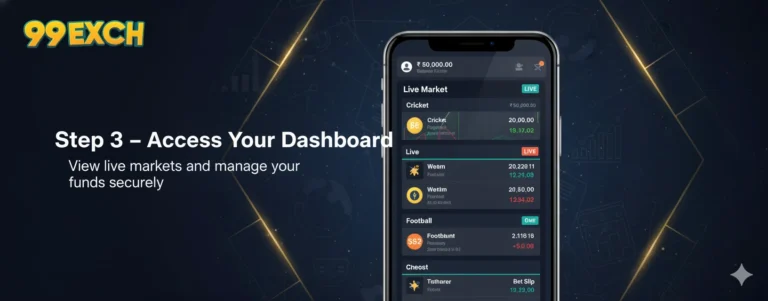
99Exch’s web portal follows a modular layout. The dashboard presents real‑time market depth, customizable watchlists, and a collapsible order entry window that adapts to the trader’s preferred asset class. The platform supports advanced charting with over 100 technical indicators and integrates directly with third‑party news feeds. Execution speed averages 140 ms, a figure that meets the expectations of most retail traders.
Sky247’s web interface is built on a responsive framework that emphasizes speed. Its “Turbo Trade” mode eliminates unnecessary visual clutter, allowing traders to place orders with a single click. The charting engine is powered by TradingView’s library, giving access to over 250 indicators and the ability to create multi‑pane layouts. Execution latency in Turbo mode can drop below 80 ms, which is attractive to high‑frequency strategies.
Mobile Applications
The 99Exch mobile app mirrors the desktop experience, offering push notifications for order status, price alerts, and margin calls. It supports biometric login, voice‑activated order placement, and a built‑in tutorial that guides beginners through the first trade. The app’s average rating on the Play Store and App Store exceeds 4.5 stars.
Sky247’s mobile suite includes a “Lite” version for low‑bandwidth environments and a full‑featured “Pro” version with API access for algorithmic trading on the go. The Pro app allows users to upload custom Python scripts that run on the device, a feature seldom seen in the Indian brokerage space.
Product Offering
Both brokers provide access to equities, derivatives (futures and options), commodities, and currency pairs. However, there are subtle differences in ancillary products.
- Equities: 99Exch lists over 7,000 Indian stocks with zero‑commission flat‑fee plans for high‑volume traders. Sky247 offers a tiered commission structure that rewards volume but includes a minimum fee per trade.
- Derivatives: Both platforms support NSE and MCX derivatives. Sky247 provides an “Advanced Margin” calculator that automatically optimizes margin utilization based on portfolio risk, while 99Exch offers a static margin model with a clear, upfront disclosure.
- Commodities & Forex: 99Exch covers 30 commodity contracts and a limited set of USD/INR currency futures. Sky247 extends its commodity suite to include global precious metals and offers spot forex trading through a partnership with an overseas liquidity provider.
- Mutual Funds & IPOs: 99Exch integrates directly with several AMCs, allowing instantaneous mutual fund purchases. Sky247 currently routes IPO applications via an external aggregator, which can introduce a slight delay in allocation processing.
Pricing Structure and Fees
Trading Commissions
99Exch adopts a transparent flat‑fee model: INR 20 per equity trade, INR 15 per futures contract, and INR 10 per options contract, irrespective of trade size. Discounted plans are available for high‑frequency traders, reducing the fee to INR 5 per trade after crossing 1,000 trades a month.
Sky247’s fee schedule is volume‑based. For equities, the commission ranges from 0.05% to 0.01% of the transaction value, with a minimum charge of INR 10. Futures and options follow a similar percentage‑based model with a minimum of INR 8 per contract. While the percentage model can be more economical for large‑ticket trades, it may result in higher costs for small‑ticket or frequent traders.
Account Maintenance and Inactivity Charges
99Exch imposes a nominal INR 250 annual maintenance fee, waived for clients maintaining an average daily balance above INR 10,000. There are no inactivity fees.
Sky247 charges INR 150 per quarter for accounts that remain inactive for more than six months. This fee is designed to cover custodial costs but can be avoided by setting a minimal monthly trading activity.
Other Charges
Both brokers levy standard DP (Depository Participant) charges, GST, and regulatory fees as mandated by SEBI. 99Exch provides free real‑time market data for all clients, whereas Sky247 offers a premium data package at INR 500 per month, which includes Level‑II order book depth and exclusive research notes.
Research, Education, and Analytical Tools
99Exch offers a dedicated research portal that publishes daily market wrap‑ups, sector analyses, and macro‑economic outlooks authored by in‑house analysts. The platform also includes an AI‑driven “Signal Engine” that highlights potential entry and exit points based on historical patterns.
Sky247’s analytical suite emphasizes customizability. Users can create personalized dashboards, set up algorithmic alerts, and back‑test strategies using the built‑in “Strategy Lab.” The firm partners with third‑party research houses to deliver premium insights, which are accessible through the premium data package mentioned earlier.
Customer Support
Both brokers promise 24/7 customer service, but their delivery channels differ. 99Exch provides live chat, email support, and a toll‑free helpline. Average response time for chat queries is under 30 seconds, and the helpline operates with an average hold time of two minutes.
Sky247 offers live chat, a ticketing system, and a dedicated account manager for premium clients. While the ticketing response time averages 4 hours, the live chat is staffed by senior traders who can provide deeper market insights. Both firms maintain a comprehensive FAQ database and video tutorials for self‑service.
Regulatory Safeguards and Investor Protection
SEBI’s stringent regulations require all brokers to segregate client funds from operational accounts. 99Exch employs a triple‑layered escrow model, ensuring that client deposits are held in separate banks with daily reconciliation. Sky247 uses a dual‑layered approach, with real‑time monitoring tools to detect any anomalous fund movements.
In the event of a broker’s insolvency, the Investor Protection Fund (IPF) provides a safety net up to INR 1.5 crore per investor. Both 99Exch and Sky247 contribute to the IPF in accordance with regulatory guidelines.
Pros and Cons Summary
99Exch
- Simple, flat‑fee pricing structure ideal for frequent traders.
- Rapid onboarding through 99exch id verification.
- Extensive educational resources for beginners.
- Free real‑time market data for all account types.
- Limited global commodity and forex offerings.
Sky247
- Low‑latency execution, especially in Turbo Trade mode.
- Robust API and algorithmic trading capabilities.
- Extensive charting library powered by TradingView.
- Premium data package with Level‑II depth and research.
- Potential higher costs for low‑ticket trades due to percentage‑based fees.
Which Platform Is Right for You?
The decision hinges on your trading style, budget, and technological preferences. If you are a beginner or a cost‑conscious retail trader who values a straightforward fee schedule, intuitive educational tools, and quick KYC, 99Exch presents a compelling proposition. Conversely, if you are a high‑frequency trader, an algorithmic developer, or someone who needs ultra‑fast execution and advanced data feeds, Sky247’s technology‑centric ecosystem may better serve your needs.
Both brokers have demonstrated resilience in a competitive market, maintaining regulatory compliance and investing heavily in platform development. As the Indian market continues to evolve—driven by increased retail participation, the rise of digital assets, and tighter SEBI oversight—choosing the right partner will be pivotal to achieving long‑term trading success.
Conclusion
In the rapidly maturing Indian brokerage sector, 99Exch and Sky247 represent two distinct philosophies: one prioritizing simplicity and cost‑effectiveness, the other emphasizing speed and customizability. By examining key parameters—such as pricing, platform performance, product breadth, security, and support—traders can align their choice with personal objectives and risk tolerance. Whether you gravitate toward the user‑friendly, flat‑fee model of 99Exch or the high‑velocity, API‑rich environment of Sky247, both platforms provide the regulatory safeguards and technological foundations needed for a confident trading experience in 2026 and beyond.